What happened
Which rideshare policy applies, and when
Rideshare insurance is structured in periods, and which period the driver was in at the moment of impact determines what coverage is available. The difference between adjacent periods can be a hundredfold.
Published July 27, 2026 · Last reviewed July 30, 2026
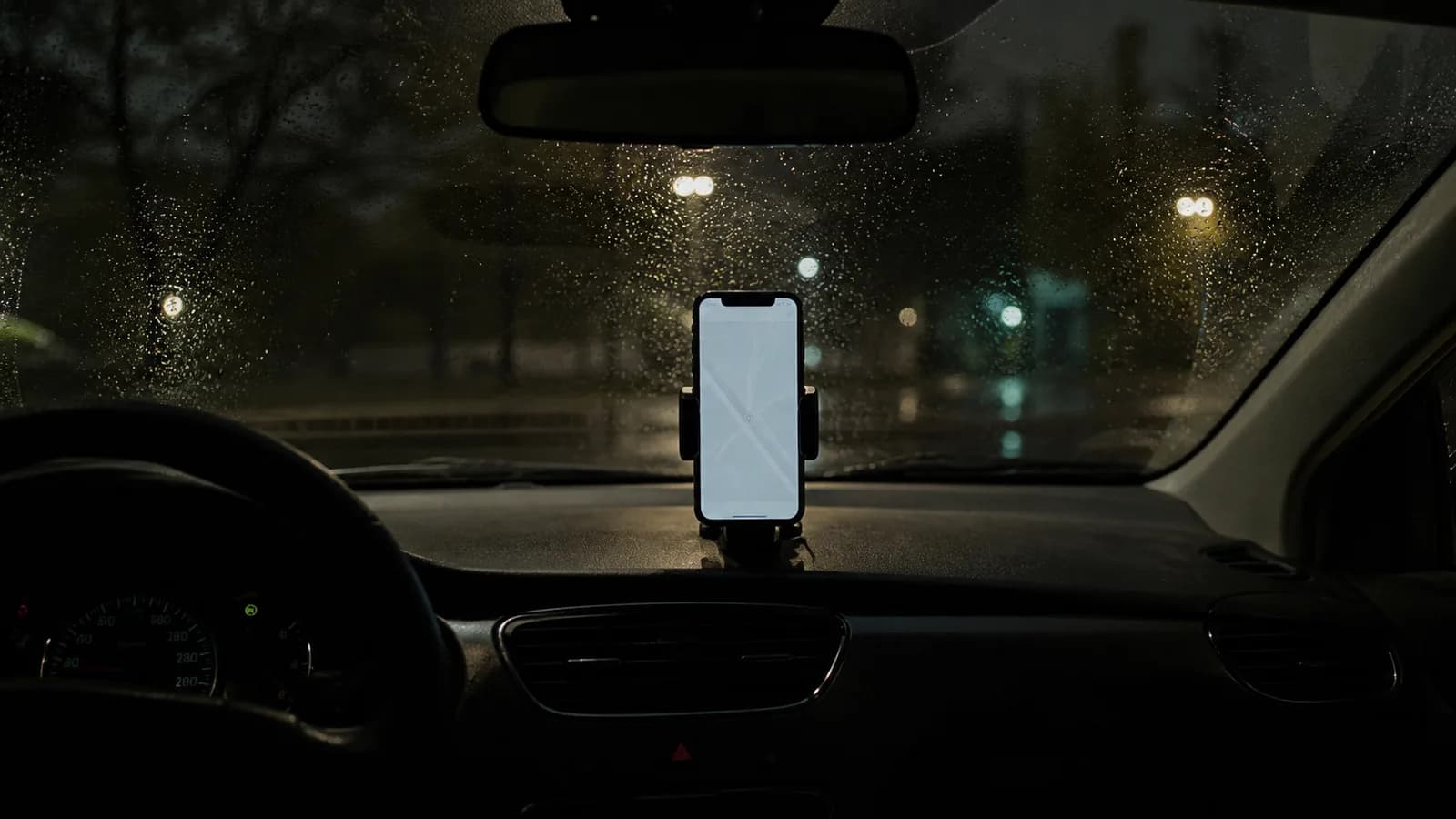
The four periods
Rideshare coverage depends entirely on what the app was doing at impact. App off means a personal policy at state minimum. App on but waiting draws thin contingent cover. Once a ride is accepted or a passenger is aboard, commercial coverage of around a million dollars applies, plus uninsured motorist cover.
This is the framework both major platforms publish, though specifics vary by state and change over time.
- App off — the driver is a private motorist. Only their personal auto policy applies, typically at state minimum limits
- Period 1: app on, waiting for a request — the platform provides contingent liability coverage, generally more than a state minimum but well below the full commercial limits. Personal policies usually exclude this period, which is what creates the gap
- Period 2: request accepted, driving to pick up — full commercial coverage applies, commonly $1 million in third-party liability
- Period 3: passenger in the vehicle — full commercial coverage applies, commonly $1 million, plus uninsured and underinsured motorist coverage
| Driver status | Whose policy | Third-party liability | UM/UIM |
|---|---|---|---|
| App off | Personal auto only | State minimum | Driver's own, if any |
| App on, waiting | Platform contingent | Above state minimum, well below commercial | Limited |
| Request accepted, en route | Platform commercial | Commonly $1M | Yes |
| Passenger aboard | Platform commercial | Commonly $1M | Yes |
Proving which period applied
It's a data question, and the data exists. Platforms log driver status, GPS position, and trip events continuously. Requested through formal legal process, those records establish the driver's exact status at the timestamp of the crash.
Corroborating evidence helps and is easier to get: a passenger's own app record and receipt, the driver's statement at the scene, the police report, and the phone itself.
Because this data is held by the platform and not by you, a preservation request early in the case matters. It's routine, and it's a reason to have someone engaged rather than negotiating with an adjuster on your own.
The UM/UIM piece
During Periods 2 and 3, the platforms carry uninsured and underinsured motorist coverage. This gets overlooked constantly, and it's often the most valuable coverage in the case.
It applies where another driver caused the crash but had no insurance or not enough. If you were a passenger in an active rideshare trip and were hit by an uninsured driver, you're not out of luck — the platform's UM coverage is there, and it's substantial.
The deductible and the practical friction
Rideshare commercial coverage typically carries a high deductible for damage to the driver's own vehicle, which is the driver's problem rather than an injured third party's. It's worth knowing because it explains why drivers are often reluctant to report crashes through the app — which in turn is why you should never rely on the driver to report it.
Report it yourself through the app if you were a passenger, and keep the confirmation.
What tends to make a claim worth pursuing
None of these is a guarantee. They are the facts an attorney will look for first when deciding whether to take a case like yours.
- You have the trip record, receipt, or a screenshot of the app
- A passenger was in the vehicle
- The driver said the app was on
- The at-fault driver was uninsured or underinsured
- The police report notes the rideshare status
- You reported it through the app and have confirmation
Questions
The driver says the app was off. I don't believe them.
Their statement doesn't decide it — the platform's data does, and it's obtainable. Drivers sometimes misremember and sometimes have incentives around the deductible. This is exactly the kind of dispute that gets resolved by records rather than testimony.
Can I sue Uber or Lyft directly rather than the driver?
Direct liability claims run into the independent contractor defense, which platforms litigate hard and often win. It matters less than it sounds, because the commercial insurance policy applies during active periods regardless of the employment question. The policy is the target, not the corporate defendant.
I was a delivery driver, or I was hit by one.
Food and package delivery platforms have their own insurance structures that are broadly similar in shape but differ meaningfully in limits and in when coverage attaches. The same analysis applies: identify the platform, establish the status at impact, find the policy.
Read next
Other situations
I was a passenger
You're almost certainly not at fault. The work is finding the coverage.
Read this
A taxi or rideshare hit me
Often more coverage available than an ordinary crash — if you can identify the vehicle.
Read this
I drive and I was hurt
Classification decides whether comp applies — and it's not decided by your 1099.
Read thisEvidence and research resources
See all resourcesEvidence checklist
The records, objects, photographs, and timelines worth preserving now.
Read thisPlain-language glossary
Medical, insurance, safety, and legal terms explained without the jargon.
Read thisOfficial sources
The government, court, safety, and medical sources used to check this site.
Read thisHave a lawyer look at this
A free review tells you whether the facts you have are the facts that matter. No cost, and no obligation to hire anyone.
Free · No obligation · About 90 seconds