What happened
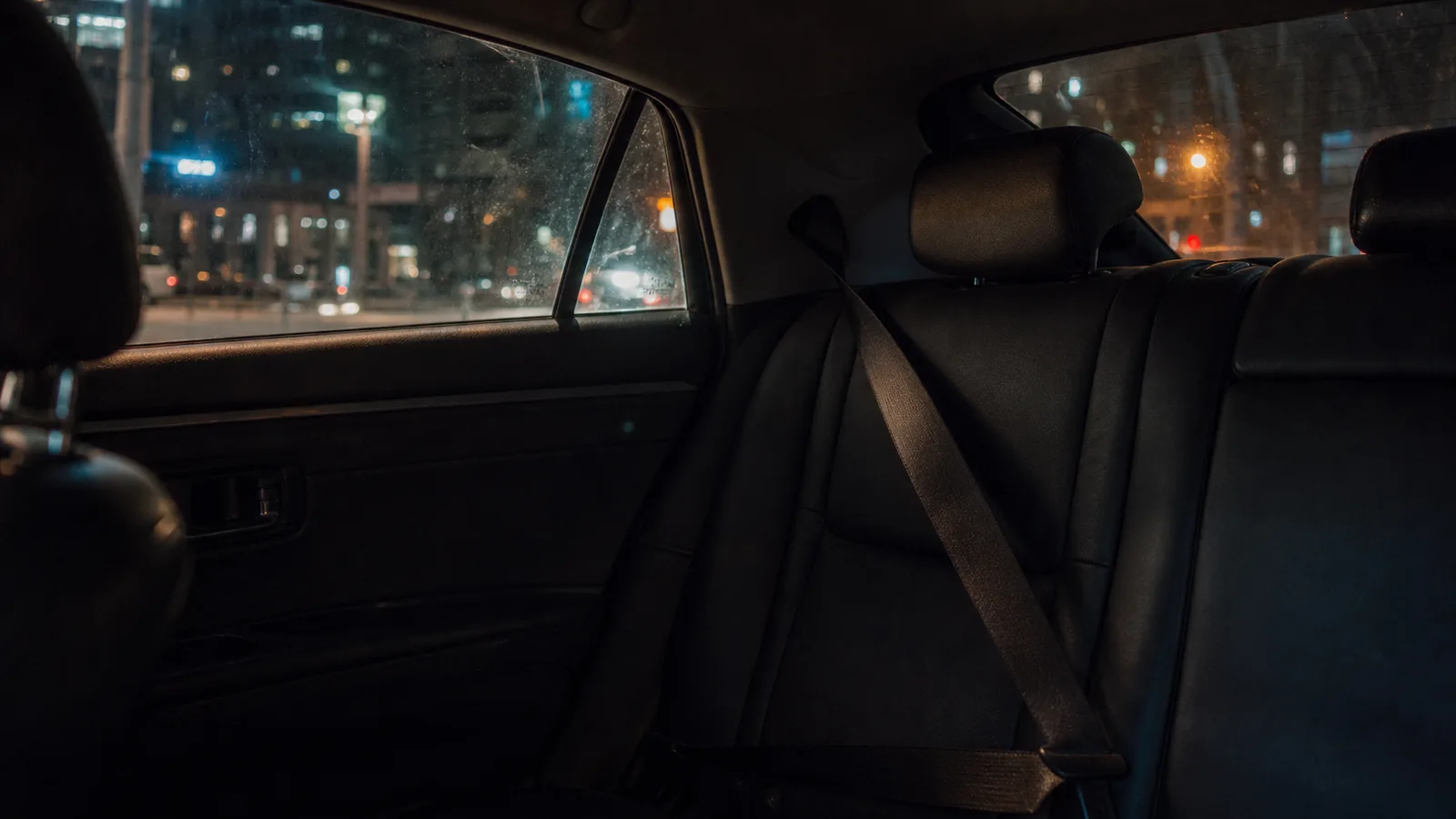
You were a passenger. This is the simplest version.
A passenger sitting in the back of a vehicle did nothing to cause a crash. That removes comparative fault, which is the defense insurers rely on most heavily in ordinary auto claims.
It also means you may be able to claim against more than one policy, because you don't have to pick a side.
Published July 27, 2026 · Last reviewed July 30, 2026
You may have more than one claim
If the driver you were riding with caused the crash, you claim against their coverage. If another vehicle caused it, you claim against that driver's coverage. If both contributed, you can generally pursue both.
That last point matters more than it sounds. Where the other driver's coverage is thin — and state minimums are low in most of the country — reaching a second policy can be the difference between covering your medical care and not.
In rideshare specifically, the platform's uninsured and underinsured motorist coverage is a significant and frequently overlooked route. If you were a passenger during an active trip and the at-fault driver was uninsured or carried too little, the platform's UM/UIM coverage applies — and it's substantial.
What to capture at the scene
You're in the unusual position of being an uninvolved participant, which means you can document things the drivers are too rattled to record.
- Screenshot the whole trip record in the app before anything else
- Photograph both vehicles, plates, positions, and the wider scene
- Photograph the taxi's medallion or livery number and any company markings
- Get both drivers' names, licenses, and insurance cards
- Get contact details for any other passengers and any witnesses
- Note whether the vehicle had a dashcam — many for-hire vehicles do
- Make sure the police report identifies the vehicle as for-hire and names the company
Get evaluated, even if you feel fine
Rear-seat passengers experience crash forces differently — often without a shoulder belt, frequently unbraced because they didn't see it coming, and sometimes striking the seat in front or a divider. Neck, back, and head injuries commonly present hours or days later.
The delay between a crash and the first medical visit is the single most exploited weakness in any injury claim. Get seen the same day if you can, and tell the provider exactly what happened so the mechanism is in the record.
Your own coverage may help too
Even as a passenger in someone else's vehicle, your own auto policy may provide medical payments or personal injury protection coverage, and in no-fault states PIP is generally the first payer regardless of who caused the crash. Your own UM/UIM coverage can also apply when the at-fault driver is uninsured.
Using your own coverage generally doesn't raise your rates for a crash you didn't cause, and it doesn't prevent pursuing the at-fault party. Check your declarations page.
What tends to make a claim worth pursuing
None of these is a guarantee. They are the facts an attorney will look for first when deciding whether to take a case like yours.
- You have the trip record, receipt, or app history
- You were treated the same or next day
- The police report identifies the for-hire vehicle and company
- The at-fault driver was uninsured or minimally insured
- You have your own auto policy with med-pay, PIP, or UM/UIM
- The vehicle had a dashcam, or the area had cameras
Questions
Does making a claim affect the driver personally?
You're claiming against insurance, which is exactly what it exists for. In rideshare during an active trip, you're primarily claiming against the platform's commercial policy rather than the driver's personal coverage.
The rideshare company says the driver is an independent contractor.
That affects some theories of liability and not others. Regardless of classification, the platform's own commercial policy provides third-party coverage during active trip periods — that coverage exists independent of the employment argument. Contractor status is a fight about vicarious liability, not about whether the policy applies.
I took the ride from an airport. Does that change anything?
It can. Airport for-hire operations are separately permitted and regulated, which often means additional insurance requirements and additional records — permits, dispatch logs, and camera coverage. It usually helps.
The driver asked me not to report it.
Report it anyway. A crash with no police report and no contemporaneous record becomes very difficult to prove, and any informal arrangement doesn't bind an insurer and won't cover treatment you need in six months.
Read next
Other situations
A taxi or rideshare hit me
Often more coverage available than an ordinary crash — if you can identify the vehicle.
Read this
I drive and I was hurt
Classification decides whether comp applies — and it's not decided by your 1099.
Read this
It was an Uber or Lyft
Four coverage states. The one that applied at impact decides the claim's ceiling.
Read thisEvidence and research resources
See all resourcesEvidence checklist
The records, objects, photographs, and timelines worth preserving now.
Read thisPlain-language glossary
Medical, insurance, safety, and legal terms explained without the jargon.
Read thisOfficial sources
The government, court, safety, and medical sources used to check this site.
Read thisHave a lawyer look at this
A free review tells you whether the facts you have are the facts that matter. No cost, and no obligation to hire anyone.
Free · No obligation · About 90 seconds