What happened
You were hit by a for-hire vehicle
Whether you were in another car, on a bike, or on foot, being hit by a for-hire vehicle is generally better for the claim than being hit by a private one, because commercial and platform policies carry far higher limits than the state minimums most private drivers carry.
The catch is identification. You need to establish which vehicle, which company, and what it was doing.
Published July 27, 2026 · Last reviewed July 30, 2026
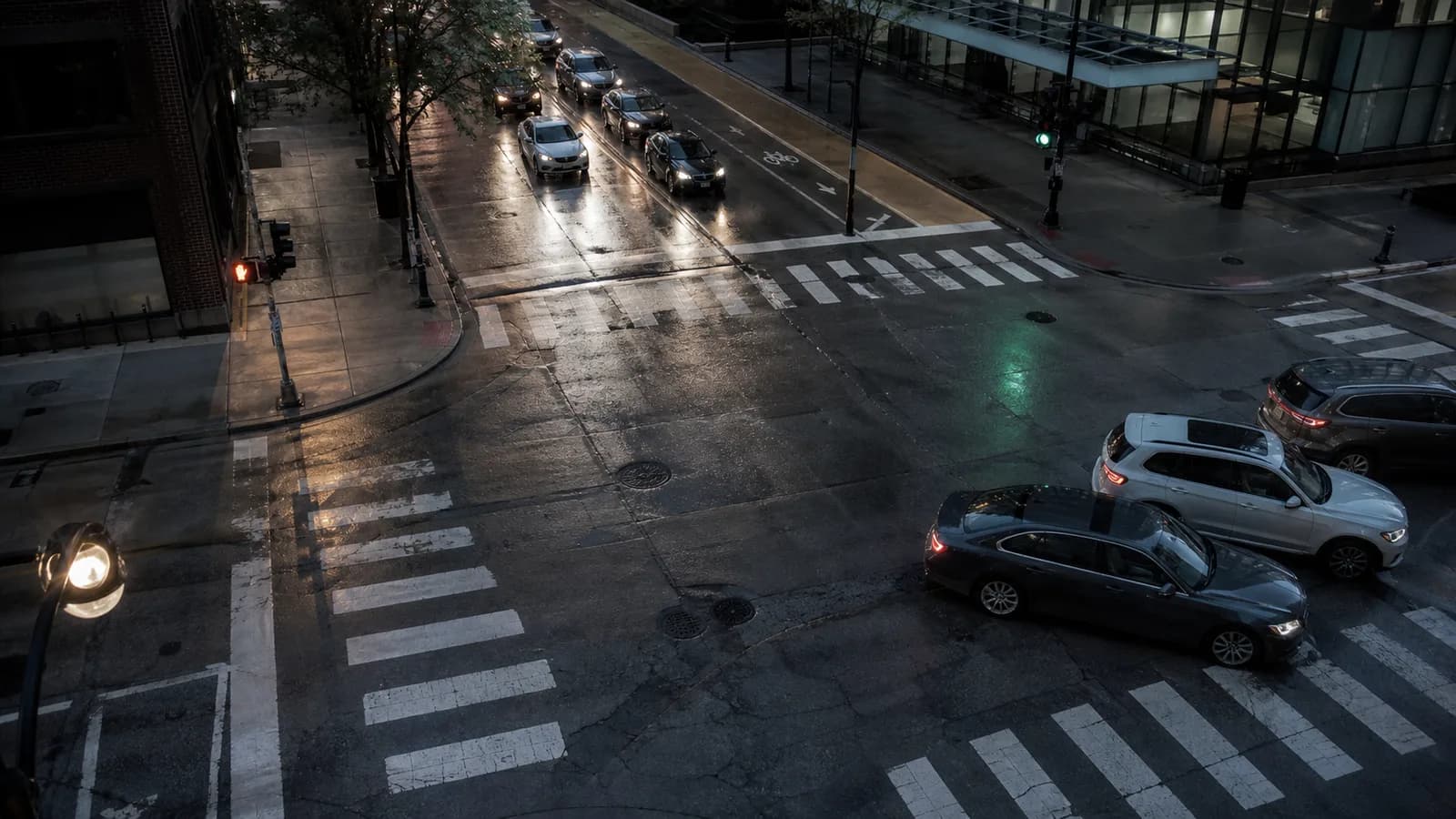
Identify the vehicle immediately
This is the whole game in the first ten minutes, and it's where these claims most often fall apart.
- Photograph the license plate first, before anything else
- Photograph the medallion, livery, or TCP number, and any company name or decal
- Photograph any rideshare trade dress in the windshield
- Get the driver's name and license, and their TLC or for-hire license if there is one
- Ask directly whether the app was on and whether they had a passenger — and write down exactly what they say
- Get any passenger's contact information. Passengers are neutral witnesses with app records proving the trip was active
- Make sure the police report captures the vehicle's for-hire status
Pedestrians and cyclists
For-hire vehicles interact with pedestrians and cyclists constantly and in predictable ways: pulling to the curb across a bike lane, discharging passengers into traffic, stopping abruptly for a hail or a pin, double-parking, and making sudden turns while navigating.
Dooring — a passenger opening a door into a cyclist — is its own category, and in many jurisdictions there's a specific ordinance placing the duty on the person opening the door. Liability may reach the passenger, the driver, and the company depending on the circumstances and local rules.
Pedestrian and cyclist injuries are typically severe, which means the higher commercial limits matter enormously. Even where an initial insurer denies, the layered coverage in for-hire operations often means another policy sits behind the first.
Hit-and-run and unidentified vehicles
If the vehicle left, act quickly. For-hire vehicles are more traceable than private ones — they're permitted, tracked, and frequently on camera.
Report it to the police immediately. Note the time and exact location. Then look for cameras: businesses, traffic and transit cameras, doorbell cameras, and parking structures. Most retain footage only briefly, so requests need to go out in days.
Rideshare and dispatch companies hold GPS records that can identify which of their vehicles was at a location at a time — obtainable through a formal legal request, not by asking. And your own uninsured motorist coverage may apply if the vehicle is never identified.
What tends to make a claim worth pursuing
None of these is a guarantee. They are the facts an attorney will look for first when deciding whether to take a case like yours.
- You identified the vehicle, plate, or medallion number
- A passenger was in the vehicle at the time
- The police report notes the for-hire status
- Camera footage exists nearby
- You were a pedestrian or cyclist, where injuries and coverage are both larger
- You were treated the same day
Questions
I don't know if the app was on. Can that be found out?
Yes. Platforms maintain detailed trip and GPS records showing exactly what the driver's status was at any timestamp, and that data is obtainable through formal legal process. It's a routine part of building these cases.
The driver's personal insurer denied the claim.
That's common and expected — personal auto policies contain livery exclusions that deny coverage while driving for hire. The denial isn't the end; it's a signpost pointing to the commercial or platform policy that should apply instead.
I was on a bike and wasn't wearing a helmet.
It's raised as a comparative fault argument, and its effect varies by state — several bar or limit that argument entirely for adult cyclists where no helmet law applies. It also has no bearing at all on injuries that aren't to the head.
Read next
Other situations
I was a passenger
You're almost certainly not at fault. The work is finding the coverage.
Read this
It was an Uber or Lyft
Four coverage states. The one that applied at impact decides the claim's ceiling.
Read this
I drive and I was hurt
Classification decides whether comp applies — and it's not decided by your 1099.
Read thisEvidence and research resources
See all resourcesEvidence checklist
The records, objects, photographs, and timelines worth preserving now.
Read thisPlain-language glossary
Medical, insurance, safety, and legal terms explained without the jargon.
Read thisOfficial sources
The government, court, safety, and medical sources used to check this site.
Read thisHave a lawyer look at this
A free review tells you whether the facts you have are the facts that matter. No cost, and no obligation to hire anyone.
Free · No obligation · About 90 seconds